
Anyone building a new home or replacing an aging system eventually asks the same question: wouldn’t it make sense to install a larger septic tank now, just to be safe? It’s a fair instinct. A bigger tank sounds like it should mean more septic tank capacity, less hassle, and room to grow into.
Septic systems don’t really run on a bigger-is-better rule. Every installation gets carefully mapped to one specific home, factoring in its expected wastewater output, bedroom count, soil type, local regulations, and how much the drain field can truly handle. Installing a tank that’s larger than what your property actually needs, without accounting for all of that, can end up costing more without solving anything.
For homeowners in Mount Vernon, Stanwood, Oak Harbor, or anywhere else in Skagit County, understanding proper septic tank size requirements makes it a lot easier to make a decision that fits both your property and your budget.
Why Homeowners Consider Installing a Larger Septic Tank
Most people who ask about a larger septic tank aren’t overthinking it. They’re usually just trying to stay ahead of future problems, whether that means avoiding another project down the road or not wanting to think about their septic system again for a long while.
A few reasons tend to come up more than others:
- They’re planning a home addition somewhere down the line
- Their family is growing, and they want room to spare
- They’d rather not deal with frequent pumping appointments
- They assume, understandably, that a bigger tank just holds up longer
- They want the property “future-proofed,” so they don’t have to revisit this decision
Every one of those reasons makes sense on paper. The catch is that a bigger tank, on its own, doesn’t actually guarantee any of them come true.
| Homeowner Goal | Does a Larger Tank Solve It? |
| Preparing for future expansion | Sometimes, but only if the plans are already approved. |
| Fewer pumping visits | Not automatically |
| Better long-term performance | Depends on how the whole system is designed |
| More wastewater capacity | Only if the rest of the system can support it |
| Peace of mind | Usually comes from correct sizing, not from size alone |
That’s really the heart of it: a septic system isn’t a single part you can upgrade in isolation. It’s a connected unit, and the tank is only one piece of that puzzle.
How Septic Tank Size Is Determined
A common misconception is that tank size is determined solely by how many people live in the house. In practice, septic tank size requirements depend on professionals weighing several factors before recommending a system, and household size is just the starting point of that conversation.
Here’s what actually factors in:
- Number of bedrooms
- Expected daily wastewater volume
- Local permitting rules
- Soil conditions
- Drain field design
- Property layout
- Any construction that’s already been approved for the future
Bedroom count tends to carry more weight than who’s actually living there right now, mostly because it’s a far more reliable indicator of long-term wastewater demand across Skagit County and similar communities, which is why a proper septic system installation always starts here.
Can You Legally Install a Larger Septic Tank?
The honest answer is: it depends. There’s no blanket yes-or-no here. Approval for a larger septic tank comes down to local permitting, engineering plans, and whether the proposed system checks out against regulations. Simply wanting more septic tank capacity isn’t the same as getting the green light for one.
Factors that affect approval:
- County health department requirements
- A completed site evaluation
- Soil conditions
- Drain field design
- Overall system capacity
Homeowners in Mount Vernon, Stanwood, Oak Harbor, and Sedro Woolley should expect these septic tank installation decisions to run through local permitting first, which is why a proper site evaluation always comes before any sizing recommendation.
Potential Benefits of Installing a Larger Septic Tank
There are situations where extra capacity genuinely makes sense, as long as it’s backed by the full system design rather than picked at random.
- Preparing for approved future expansion — if bedroom additions or higher usage are already planned, sizing for that upfront can prevent rework later.
- More holding capacity. A larger tank simply gives wastewater more time to settle before it reaches the drain field. That said, it’s worth being clear-eyed about what this does and doesn’t do: it’s not the same as increasing the amount the system can actually treat.
- Potentially longer stretches between pumping. This can happen under the right circumstances, but it’s not something you can count on. How often you pump still depends on household size, how much water your family uses, and how consistently the system has been maintained.
- Flexibility for long-term plans, but only when it’s backed by real engineering and permitting work. On its own, that flexibility isn’t much of a reason to size up.
Quick Tip: Before choosing a larger tank, ask how it fits with the drain field and soil conditions. A balanced system almost always outperforms one oversized component.
The CDC points out that properly designed, well-maintained systems are what actually prevent untreated sewage from reaching groundwater, not simply larger equipment (CDC.gov).
The Hidden Drawbacks of an Oversized Septic Tank
- Higher upfront costs — bigger tanks cost more to buy and install, and unused capacity rarely pays that back.
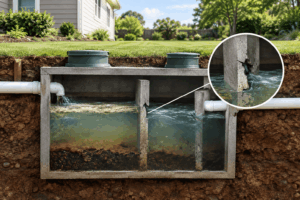
- No boost to drain field capacity — this is the biggest misunderstanding out there. The tank separates waste; the drain field treats it. Sizing up the tank alone doesn’t change what the drain field can handle.
- Permitting isn’t guaranteed — local rules are based on your specific site, and equipment outside approved plans can trigger delays or design changes.
- Paying for capacity you may never use — plans that never materialize mean money spent for nothing.
Septic Tank Size vs. Drain Field Size: Understanding the Difference
Think of the tank and drain field as partners, not competitors.
| Septic Tank | Drain Field |
| Collects and separates wastewater | Distributes and treats wastewater |
| Holds solids and scum | Filters treated effluent through soil |
| Sized to match system design | Sized to match expected wastewater flow |
| Can’t make up for an undersized drain field | Can’t make up for a poorly sized tank |
This is exactly why a proper septic system installation evaluates both components together rather than treating the tank as the only variable that matters.
Questions to Ask Before Choosing a Larger Septic Tank
Will Your Property Need Future Expansion?
Planning to add bedrooms or build an accessory unit? Bring that up with a septic professional early. Just make sure the decision is based on confirmed plans, not guesses about what might happen someday.
What Do Local Septic Regulations Allow?
Every county sets its own rules. Sizing, layout, and approval typically hinge on the number of bedrooms, site evaluation, soil type, available space, and local health department standards. Homeowners in Mount Vernon, Stanwood, Oak Harbor, and Sedro Woolley should confirm compliance before construction starts.
Is the Additional Cost Justified?
Ask yourself honestly:
- Will that extra capacity actually get used?
- Does the full system support a larger tank?
- Would that money be better spent on regular septic tank maintenance instead?
- Has a professional actually evaluated your property’s needs?
Sometimes the smartest system isn’t the largest one. It’s the one that fits.
How Septic Professionals Evaluate the Right Tank Size
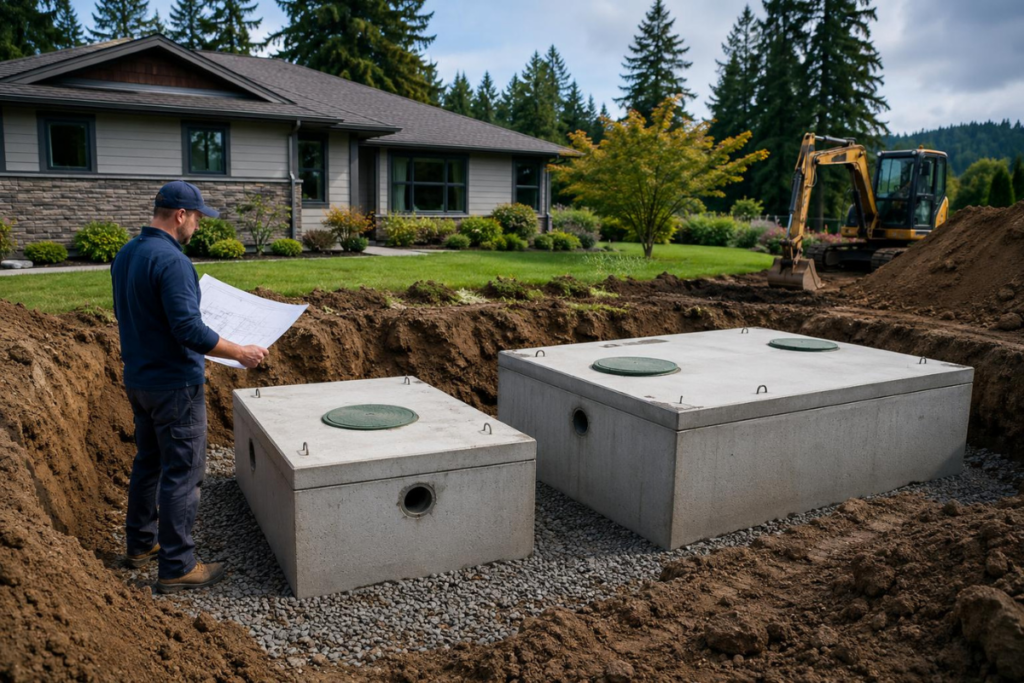
Choosing a tank size isn’t as simple as picking from a list of available options. A proper septic tank installation depends on professionals weighing several factors together, not in isolation, since it’s the combination that determines the right fit:
- Number of bedrooms in the home
- Expected wastewater production
- What the soil can realistically handle
- How the property is laid out
- What the drain field design allows
- Local permitting requirements
- The condition of the existing system, if one is already in place
Gateway Septic Service takes this same approach, sitting down with property owners to understand their actual septic tank capacity needs before making a recommendation, instead of steering everyone toward the largest septic tank available. Our team works across Skagit County, and the sizing decisions we make are shaped by each property’s specific septic tank size requirements rather than a one-size-fits-all default.
Final Thoughts: Bigger Isn’t Always Better for Septic Tank Installation
Choosing a septic tank really isn’t about pointing at the largest option on the list and calling it done. It’s about finding the one that actually fits your property, your household, and your local regulations. A properly sized tank paired with a well-matched drain field will consistently outperform an oversized tank installed without a full system evaluation.
If you’re planning a septic tank installation, replacing an aging system, or just want a clear answer on the right septic tank size requirements for your property, Gateway Septic Service can help. Our team handles septic tank installations, inspections, pumping, repairs, and riser installations throughout Mount Vernon, Stanwood, Oak Harbor, Sedro-Woolley, and the surrounding Skagit County area. Reach out to us at 360-826-5520 to schedule an evaluation built around what your home actually needs.