
Most homeowners notice a handful of warning signs, slow drains, a bad smell outside, or a patch of grass that’s greener than the rest of the yard, and jump straight to the same conclusion: the tank needs to go. It’s an understandable guess, but it’s often the wrong one.
A septic system isn’t just a tank sitting in the ground. It’s several parts working together, and when one of them starts to fail, the symptoms can look exactly like a full system breakdown, even when the tank itself is perfectly fine. Jumping straight to septic tank replacement without checking the rest of the system can mean spending money you didn’t need to spend, while the actual problem stays right where it was.
More often than not, a proper septic tank inspection turns up something smaller: a cracked baffle, a blocked pipe, a shifted distribution box, or a drain field that’s simply tired. Finding the real cause first means you’re fixing the actual problem instead of guessing.
If you’re in Mount Vernon, Stanwood, Oak Harbor, Sedro Woolley, or anywhere nearby in Skagit County, knowing how these pieces fit together can save you both money and stress.
Quick Insight: A struggling septic system doesn’t always mean a failing tank. The smartest first move is usually a full inspection, not a replacement. According to the EPA, more than one in five U.S. households run on an onsite septic system, which is exactly why routine inspections matter so much for both your wallet and local groundwater.
Why Replacing the Entire Septic Tank Isn’t Always the First Answer
It makes sense that the tank gets blamed first. It’s the biggest, most obvious part of the system. But septic tanks are built to last for decades when they’re properly cared for.
Before anyone talks about septic tank replacement, a good technician will check every major component to see whether a repair or a smaller upgrade solves the issue instead.
| Symptom | Likely Cause |
| Slow drains | Pipe restriction or outlet issue |
| Standing water in the yard | Drain field trouble |
| Sewer smell outside | Damaged baffle or venting problem |
| Frequent backups | Distribution issue or clogged pipe |
| Hard to maintain | Damaged lid or buried risers |
A full septic system inspection is really the only way to pinpoint what’s actually going on before anyone recommends repair or replacement. The EPA also recommends inspecting your system regularly and pumping it every 3 to 5 years, depending on household size and usage.
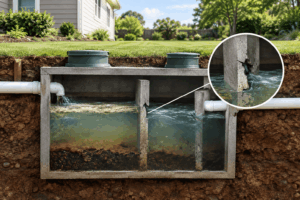
Component 1: Inspect the Septic Tank Baffles
Baffles don’t get much attention, but they do a lot of work. They guide wastewater through the tank and keep solids from escaping into the drain field. When a baffle cracks, shifts, or wears out, the whole system can start acting up in ways that look far more serious than they are.
Here’s what a baffle handles:
- Guide wastewater properly into the tank
- Stop solids from moving toward the drain field
- Keep the drain field from wearing out early
- Help separate waste the right way
Once a baffle fails, solids start reaching the drain field way earlier than they’re supposed to, cutting its lifespan short and causing septic tank problems that could’ve been avoided.
When baffles fail, solids can reach the drain field much sooner than they should, shortening its lifespan and creating septic tank problems that didn’t need to happen.
Signs of baffle damage:
- Frequent backups
- Odd smells near the tank
- A saturated drain field
- Solids showing up where they shouldn’t
The good news: fixing a baffle costs a fraction of what a full tank replacement runs.
Quick Tip: If it’s been years since your last inspection, ask your technician to check the baffles specifically at your next visit. Small fixes now beat big ones later.
Component 2: Evaluate the Septic Tank Lid and Risers
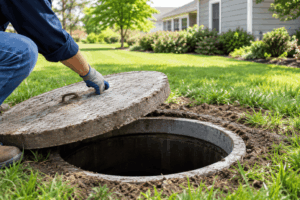
It’s easy to focus on what’s buried and forget what’s right on the surface. The tank lid and any risers installed on it matter more than most homeowners realize.
A cracked or poorly sealed lid lets extra rainwater into the tank. And on older systems where the lid sits a foot or two underground, every septic tank inspection or pumping visit turns into a small excavation project.
Gateway Septic Service installs septic tank risers that raise the access point to ground level, reducing digging and making future visits faster.
Why this matters:
- Encourages homeowners actually to keep up with inspections
- Makes scheduled pumping simpler
- Supports better preventive maintenance
- Speeds up repairs if something does go wrong
In wetter areas like Mount Vernon and Sedro Woolley, where the ground stays saturated for stretches of the year, having solid access to the tank isn’t just convenient. It’s practical.
| Without Risers | With Risers |
| Lid buried underground | Access at ground level |
| Digging before every visit | Faster inspections |
| Risk to lawn and landscaping | Minimal disruption |
| Longer appointments | Quicker turnaround |
Risers won’t change how the tank treats wastewater, but they make every future visit a lot less of a hassle.
Component 3: Check the Inlet and Outlet Pipes
Wastewater has to flow smoothly in and out of the tank for everything to work properly. The inlet pipe brings it in from the house; the outlet pipe sends it toward the drain field. When either one gets blocked or damaged, the symptoms can mimic a full system failure.
Common culprits:
- Tree roots pushing into the line
- Pipes settling or shifting over time
- Grease buildup
- Solid blockages
- Cracks in the pipe itself
Signs your pipes need a look:
- Several slow drains at once
- Gurgling toilets
- Backups in sinks or tubs
- Indoor sewage odors
- Plumbing problems throughout the house
Rather than assuming the tank is done for, most professionals check these pipes first, since a repair here can restore normal function without touching the tank at all.
The CDC notes that a properly working septic system plays a real role in keeping untreated wastewater away from groundwater and nearby surface water.
Checklist before considering replacement:
- Has the whole system been professionally inspected?
- Are the baffles still doing their job?
- Have the inlet and outlet pipes been checked?
- Is the lid secure and in good shape?
- Would risers make future maintenance easier?
- Has a professional ruled out smaller repairs first?
If you can’t answer “yes” to most of these, a full septic tank inspection is worth scheduling before anything else.
Component 4: Assess the Drain Field Condition
The drain field handles the final stage of treatment before wastewater rejoins the soil. It sits outside the tank, but its condition affects everything upstream.
When it’s saturated or clogged, wastewater has nowhere to go, and the symptoms often look just like a tank failure, even though the tank is fine.
Signs pointing to drain field trouble:
- Standing water nearby
- Grass that’s greener or growing faster than the rest of the yard
- A persistent outdoor odor
- Slow drains throughout the house
- Backups inside the home
A proper inspection is the only reliable way to tell whether the drain field, the tank, or something else is the actual issue.
According to the EPA, regular maintenance and timely inspections reduce the risk of drain field failure, which is often one of the priciest septic tank problems a homeowner can face.
Quick Tip: Don’t assume a drain field failure just because the yard is wet. Rain, recent water use, and other components can all produce the same symptoms.
Component 5: Examine the Distribution Box
The distribution box doesn’t get much credit, but it has one important job: spreading wastewater evenly across the drain field lines. When it works right, no single section of the field gets overloaded.
If it cracks, shifts, or clogs, wastewater tends to favor one part of the field over another, and that imbalance can cause localized saturation and new septic tank problems over time.
Warning signs:
- Wet spots in just one area of the yard
- Uneven performance across the drain field
- Slow drainage throughout the house
- Repeated issues even after routine maintenance
Because these symptoms can mimic bigger failures, checking the distribution box is a step worth taking before deciding to replace septic tank components that might not need replacing at all.
What a Professional Septic Inspection Can Reveal
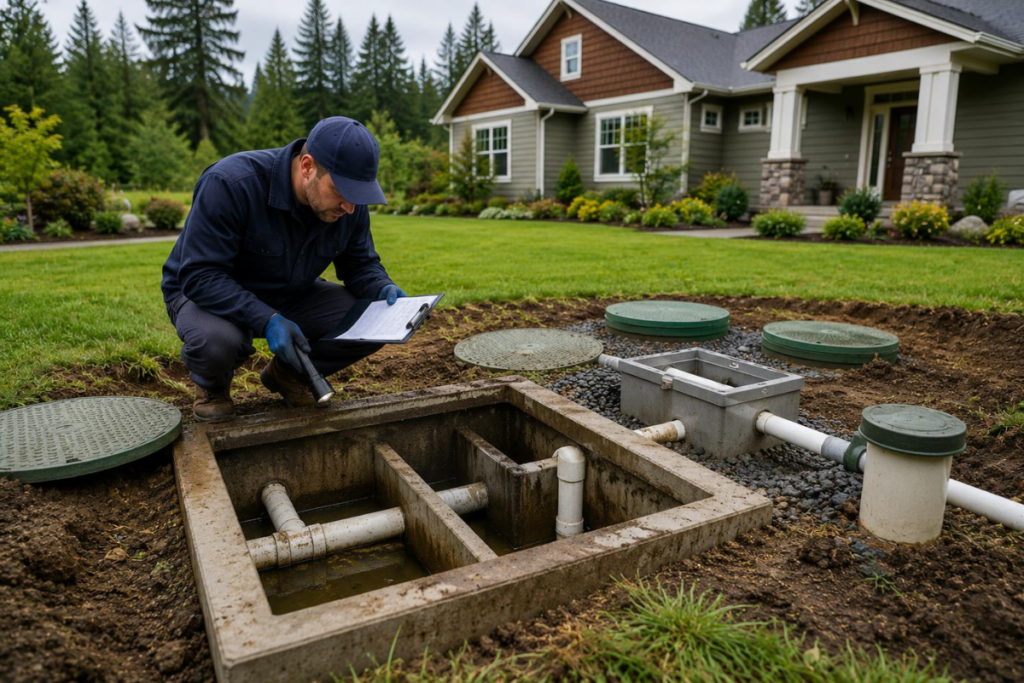
Some problems are obvious. Others build quietly for years before showing any symptoms at all. That’s the real value of a full inspection: it looks at the entire system, not just one piece of it.
A thorough inspection typically covers:
- Overall tank condition
- Baffles
- Inlet and outlet pipes
- Lid and risers
- Distribution box
- Drain field performance
- Sludge and scum levels
What it can tell you:
- Which components are working fine
- Small repairs before they turn into big ones
- What maintenance is actually needed
- Any safety concerns
- Whether replacement is genuinely necessary
Gateway Septic Service offers professional inspections built around exactly this kind of full-system approach so that homeowners can make decisions based on facts rather than guesswork.
Repair, Upgrade, or Replace? How to Make the Right Decision
One of the more common misconceptions is that replacement is always the safest bet. In reality, it depends entirely on the system in front of you.
Some systems just need a septic tank repair here or a bit of routine septic tank maintenance there. Others, especially those with serious structural damage or multiple failing parts, may genuinely need a full replacement. The decision should be based on what the inspection actually finds, not on assumptions.
| Inspection Finding | Typical Next Step |
| Damaged baffles | Repair or replace the baffle |
| Broken lid or poor access | Add or upgrade risers |
| Pipe blockage | Clean or repair the pipe |
| Distribution box issue | Repair or replace the box |
| Major structural tank damage | Consider full replacement |
Soil type, system age, household usage, and maintenance history all play a role in this decision. Looking at the full picture often saves homeowners money they didn’t know they could.
The EPA backs this up too: consistent inspections and maintenance extend the working life of onsite systems while protecting groundwater.
Save Thousands by Evaluating the Entire System First
Replacing a septic tank is a big expense, and it’s not always the right call. Most septic tank problems trace back to a single component that can be repaired or upgraded once the entire system has been properly evaluated. Taking the time to understand what’s really happening underground can save you money and add years to your system’s life.
If something feels off with your septic system, or you just want peace of mind, Gateway Septic Service provides septic tank inspection, repair, pumping, and riser installation throughout Mount Vernon, Stanwood, Oak Harbor, Sedro-Woolley, and the rest of Skagit County. Reach out to us at 360-826-5520 to schedule an inspection and get answers based on what’s actually going on with your system, not just the symptoms.