
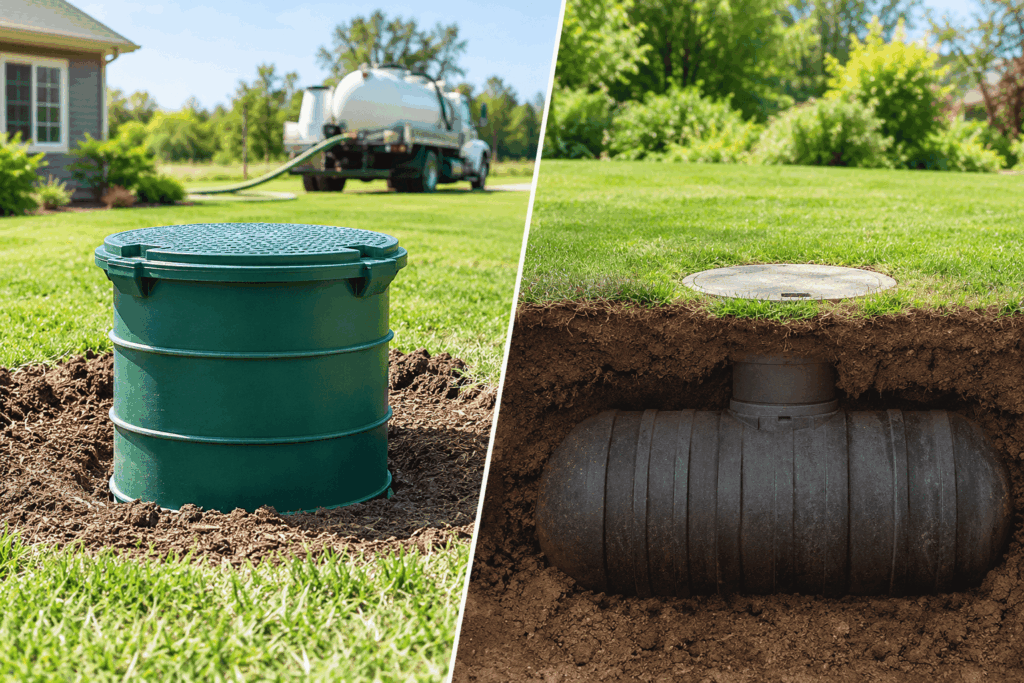
A septic appointment in the Skagit Valley rarely runs into trouble because of the pumping itself. The trouble usually begins in the first twenty minutes, when a technician arrives on schedule, the homeowner gestures toward the old maple tree, and a shovel spends the next stretch working through soggy sod to find a lid that has settled well below the surface.
Versions of this scene play out in Mount Vernon, Stanwood, Oak Harbor, and Sedro Woolley every wet season.
They usually trace back to one small decision made long ago, and that decision is what septic riser vs. no riser really comes down to. The tank works the same way underground either way. What changes is how quickly a professional can reach it.
The First Challenge of Every Septic Service Visit: Locating the Tank
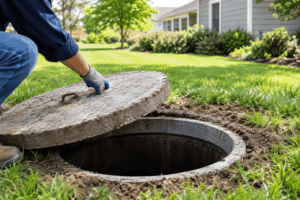
Before a technician can pump, inspect, or repair anything, they have to find and open the tank. Years of lawn growth, fresh mulch, and yard projects can hide the lid completely, and in older homes the current owners may not even know the tank’s exact location. Gateway Septic offers septic locating for these situations, which saves homeowners from digging mindlessly around the property.
Quick Comparison
- Riser in place: the lid sits at ground level, and service begins right away
- Lid buried a few inches down: soil has to be removed first
- Location unknown: locating comes before anything else
- Heavy landscaping above the tank: excavation needs extra care
A riser removes most of these steps by carrying the access point up to the surface.
What Actually Happens During a Pumping Visit Without a Riser?
The pumping itself is rarely the difficult part. Reaching the tank is where a routine appointment starts to stretch.
The Digging, Guesswork, and Lawn Damage Involved
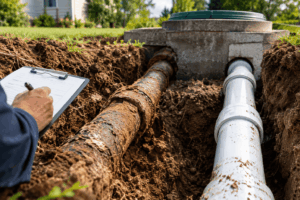
One of the most common septic tank without riser problems is the need to excavate before work can begin. Depending on the age of the property, a crew may run into:
- Sod that has grown over the lid
- Landscape fabric or decorative rock
- Garden beds and shrub roots
- Walkways or retaining walls nearby
Even when the location is known, uncovering the lid takes time. That can be discouraging for homeowners who have put real effort into their yards, since a maintenance visit should focus on the system rather than on repairing a flower bed afterward.
Why Access Lids Get Buried Deeper Over Time
Lids rarely stay at the depth where they were first set. Soil settles, lawns are reseeded, mulch builds up, and grading changes raise the ground level bit by bit, and heavy seasonal rain keeps the soil shifting. After a few years, a lid that was once easy to spot becomes a classic case of a septic tank access lid buried under layers of yard.
Common causes:
- Soil settling
- New lawn installations
- Mulch accumulation
- Grading or landscape redesigns
How This Adds Time and Cost to a Routine Visit
Extra labor at the start of a visit affects the whole appointment. Here is how the two situations compare.
| Service Step | Without a Riser | With a Riser |
| Finding the tank | May be needed | Rarely needed |
| Digging | Often required | Minimal or none |
| Yard disruption | Likely | Limited |
| Preparation time | Longer | Shorter |
| Reaching the tank | Delayed | Immediate |
During an emergency, that head start matters even more.
What Changes the Day You Need Service With a Riser Installed
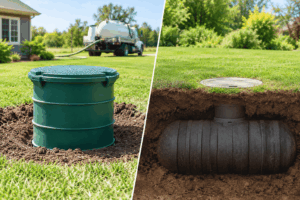
A riser extends the tank opening to ground level with a sturdy collar and a secure lid, so the crew can generally begin working almost immediately. Gateway Septic lists several riser benefits on its website: easier access, easier location, complete inspections, and less water infiltration, which counts for a lot in the wet Pacific Northwest. Together, these are the core septic tank riser benefits.
Service Becomes Faster
- Pumping starts sooner
- Inspections are easier to carry out
- Urgent calls can be addressed more quickly
Landscaping Stays Protected
A visible, permanent access point spares the areas around it:
- Flower beds and decorative stone
- Walkways
- Established lawns
Inspections Become Simpler
Gateway Septic offers inspections for routine upkeep and for home sales, and clear access makes both easier to schedule and complete.
The Hidden Cost Difference Between the Two
Many homeowners begin with one question: how much does a septic riser cost? It is a fair thing to ask, but the answer depends on the property, so an estimate after a site visit is far more reliable than any general figure. These are the factors that typically shape septic riser installation cost:
- How deep the tank lid currently sits
- The number of access points on the system
- Riser size and materials
- Soil conditions and site accessibility
- Landscaping that has to be worked around
Looking Beyond the Initial Investment
A more useful question is what repeated digging costs over the years. Every visit to a buried tank can bring extra labor and yard repair, while a riser tends to remove those recurring steps.
A Quick Reality Check
Septic care is never a one-time event. EPA guidance says the average household system should be inspected at least every three years, and household tanks are typically pumped every three to five years. Over decades in one home, that means many visits.
It’s Not Just About Convenience: Why Risers Matter for System Health
Risers are often described as a comfort upgrade, yet easy access influences how consistently a system gets looked after.
Easier Access Encourages Timely Service
When a visit means digging, it is tempting to postpone it. When the lid is right there, staying on schedule feels much simpler, and that consistency protects the system over time.
Early Detection Becomes Easier
Routine inspections can reveal:
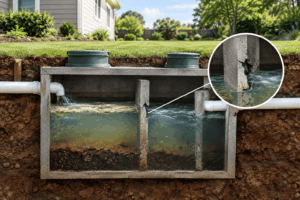
- Baffle problems
- Excess sludge buildup
- Structural concerns
- Early drain field warning signs
- Water infiltration
Faster Response During Urgent Situations
Slow drains, sewage backups, and overflow concerns call for quick answers. With access already in place, a technician can start diagnosing right away instead of spending the first stretch of the visit uncovering the tank.
Is a Riser Worth Installing on an Existing System?
Do I need a septic riser is a question many homeowners in Mount Vernon and Sedro Woolley ask, even when their system seems to be running well. The answer depends on the property.
A Riser May Be Worth Considering If:
- The lid is hard to find
- Service visits usually involve digging
- Landscaping covers the tank
- The septic system is older
- You plan to stay in the home for years
- You would like simpler inspections and pumping
A Riser May Deliver Less Value If:
- The tank is already easy to reach
- The lid stays visible all year
- Digging has never been needed
Quick tip: a professional evaluation is the fastest way to learn which group your property falls into.
What the Data Says About Preventive Septic Maintenance
Before choosing between a riser and an open lawn, it helps to see what national guidance asks of a septic owner. The EPA figures below show how often a tank needs attention, and that frequency is the main reason septic tank riser benefits add up over the years.
| Finding | Source |
| More than one in five U.S. households depend on septic systems | EPA |
| Average household systems should be inspected at least every three years | EPA |
| Household septic tanks are typically pumped every three to five years | EPA |
| Systems with pumps or mechanical parts are generally inspected once a year | EPA |
Sources: EPA, About Septic Systems and EPA, How to Care for Your Septic System
A household that follows this timing will open its tank many times over the years, and each visit goes more smoothly when a septic tank access lid buried under the lawn is no longer part of the picture. Repeated visits are also why septic tank without riser problems tend to return for the same homeowner again and again.
Maintenance works best as a routine, and routines are easiest to keep when the tank is easy to reach.
Questions to Ask Before Scheduling Your Next Septic Service
If you are still asking, “Do I need a septic riser?” a few honest questions about your yard can point you toward an answer. Run through the checklist below before your next appointment, and consider noting your answers to share with your technician.
Septic Access Checklist
- Do I know exactly where my tank is?
- Is the lid visible, or has it sunk over time?
- Does every visit involve digging?
- Has landscaping made access harder?
- Would a riser reduce disruption to my yard?
A short conversation with a septic professional can settle most of these. If your answers point to hidden lids and repeated digging, it may be time to weigh septic riser vs. no riser for your own property. Because septic riser installation cost depends on factors such as lid depth, the number of access points, and site conditions, a free estimate from Gateway Septic is the simplest way to see what applies to your home in Mount Vernon, Stanwood, Oak Harbor, or Sedro Woolley.
The Small Upgrade That Can Change Every Future Service Visit
In the end, septic riser vs. no riser is less about how the system treats wastewater and more about how every future visit unfolds. Easier access can mean less digging, a tidier yard, and appointments that stay on schedule year after year. Since 1976, our family-owned team at Gateway Septic has offered pumping, inspections, maintenance, repairs, and risers to homeowners in communities including Mount Vernon, Stanwood, Oak Harbor, and Sedro Woolley.
If your next service visit is coming up and you are weighing a riser, call 360-826-5520 to schedule a free estimate.