

Most Stanwood homeowners remember to change furnace filters and patch roof leaks. Those tasks make sense—they’re visible, predictable, and easy to schedule. But buried under the yard? A complex biological system works around the clock, processing wastewater from every fixture in the house, usually without a second thought until something goes catastrophically wrong.
The reality? Daily water habits determine whether a septic system lasts thirty years or fails within five. And the difference often comes down to simple patterns nobody thinks twice about.
This guide explores the relationship between household water consumption and septic performance—with practical steps like septic pumping and maintenance service to prevent costly disasters.
Understanding How Septic Systems Work
Before examining water impacts, here’s what happens when wastewater leaves the house.
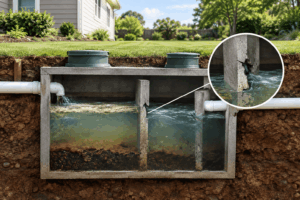
A septic system functions as a private treatment plant for properties beyond city sewer lines. Three parts handle the process:
| Component | Function |
| Septic Tank | Holds wastewater for 24–48 hours, allowing gravity to separate heavy solids (sludge) at the bottom while lighter grease and oils rise to the top (scum). |
| Drainfield | A network of perforated pipes that evenly releases partially treated wastewater into the surrounding soil for further natural filtration. |
| Soil Layers | Naturally occurring beneficial bacteria complete the purification process, allowing clean, treated water to safely return to the groundwater system. |
Wastewater enters. Gravity separates it. Solids sink, grease floats, and clarified liquid occupies the middle. That middle layer flows toward the drainfield, where soil microbes finish treatment.
Here’s the catch: Sludge and scum layers continue to grow. When they build too high, solids flow out with the liquid—straight into the drainfield pipes, which are designed only for treated water. This clogs pipes and kills soil absorption.
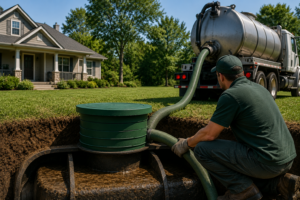
Regular septic tank pumping professionals perform—typically every 3-5 years—and remove buildup before it escapes and causes permanent damage.
How Daily Household Water Use Affects Septic Systems in Stanwood Systems
Every gallon entering the tank needs to be processed and absorbed by the soil. Normal use? No problem. Excessive volume? That’s when things break.
Common Sources of Excess Load
- Six laundry loads running Saturday morning consecutively
- That toilet is running constantly in the guest bathroom
- Back-to-back showers during morning rush hour
- The dishwasher and washing machine are operating all day, simultaneously
These create hydraulic overload—water arriving faster than the system can treat it, or soil can absorb it.
The Ripple Effects of Overuse
Poor Drainage Inside Home
The kitchen sink takes five minutes to drain. Shower water pools around ankles. The toilet flushes weakly.
Pooling Water Over Drainfield
Mysterious puddles appear in the yard, even during dry spells.
Septic Backup
The nightmare: sewage reversing course, surfacing through drains, toilets, and basement floor drains.
Drainfield Failure
The wallet-draining outcome—complete replacement often costs thousands of dollars.
Without controlling water consumption, these shift from unlikely to probable.
Homeowners spend thousands on emergency fixes instead of investing hundreds in preventive measures like septic tank pumping and maintenance.
Signs Your Septic System Is Overloaded
Catching early warnings prevents catastrophic failures. Look for:
Visual & Sensory Signals
- Sewage odors drifting from drains or lingering in the yard
- Fixtures are draining noticeably slower across the house
- Gurgling sounds from toilets when someone runs water elsewhere
- Standing water appearing above the drainfield
- Bright green grass patches where they shouldn’t be (septic liquid surfacing acts as fertilizer)
Practical Checklist
| Symptom | Possible Cause |
| Slow drains | The septic tank is nearing capacity, restricting proper wastewater flow. |
| Sewage odors | Developing blockages or an overloaded septic tank causing gases to escape. |
| Pooling water in the yard | The drain field is struggling to absorb incoming wastewater efficiently. |
| Gurgling sounds | Air displacement caused by wastewater backing up within the system. |
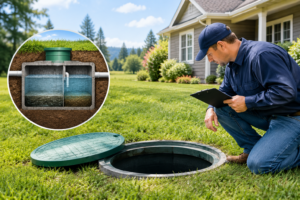
These aren’t annoyances to live with—they’re urgent messages. When spotted, Stanwood homeowners benefit from scheduling a septic inspection conducted by professionals to diagnose problems before they escalate.
Common Water Usage Mistakes That Harm Septic Systems in Stanwood Systems
Some household routines quietly destroy septic systems. Recognition enables prevention.
Mistake #1 — Overloading Washing Machines
Running multiple loads back-to-back floods the tank with water. The bacterial colony, which separates solids from liquids, can’t keep pace. Partially treated water—still containing solids—floods the drainfield.
Better approach: Spread those loads throughout the week. Same clean clothes, dramatically less system stress.
Mistake #2 — Ignoring Leaks and Running Toilets
A dripping faucet seems minor. But the math tells a different story.
EPA data shows: A single leaking toilet wastes 200+ gallons daily—over 6,000 gallons monthly. That equals water consumption from three extra people living in the house full-time.
Better approach: Fix leaks within 48 hours. A $12 toilet flapper beats a $7,500 drainfield repair.
Mistake #3 — Treating the System Like a Sewer
Products labeled “flushable“—wipes, feminine products, paper towels—don’t break down like toilet paper. They accumulate in tanks, clog pipes, and sometimes escape into drainfield lines.
Tip: Flush only human waste and toilet paper. Everything else goes in the trash, regardless of packaging promises.
How Stanwood’s Climate and Soil Affect Septic Performance
Stanwood’s environment significantly shapes septic system behavior. Local soil composition determines the rate of wastewater dispersal from drainfields.
Soil Type Impact
Clay-heavy soils (common locally):
Drain slowly. During wet months, clay becomes nearly impermeable—drainfields saturate quickly even with normal water use.
Sandy soils:
Drain faster but filter less effectively. Wastewater can percolate too quickly, reaching groundwater before adequate treatment.
Seasonal Challenges
Wet Winters
Heavy rainfall saturates the soil before septic discharge enters the picture. Drainfield absorption capacity drops dramatically.
Dry Summers
Drought affects soil bacteria populations. Very dry soil can crack, creating channels that bypass filtration layers.
Understanding these dynamics helps property owners adjust usage to environmental realities. A system handling 400 gallons daily in August might fail at 300 gallons during January’s saturated conditions.
Tips to Protect Your Septic System in Stanwood System
Maintaining system health doesn’t require lifestyle upheaval. Strategic adjustments make the difference.
Monitor Water Usage Patterns
| Smart Winter Habit | Why It Protects Your Septic System |
| Spread laundry throughout the week | Prevents hydraulic shock and helps the system process wastewater at a steady, manageable pace. |
| Install low-flow fixtures | Reduces household water use by approximately 25–40% without disrupting daily routines. |
| Fix leaks promptly | Stops thousands of unnecessary gallons from entering the system each month, easing strain on the tank and drain field. |
Schedule Regular Service
Even well-maintained systems need expert attention. Routine Stanwood septic tank maintenance service—including pumping every 3-5 years—removes solids before problems develop.
Pumping frequency:
| Household Size | Recommended Pumping Interval |
| 1–2 people | Every 4–5 years |
| 3–4 people | Every 3–4 years |
| 5+ people | Every 2–3 years |
Landscape Wisely
Tree roots seek water aggressively. Planting near septic components invites intrusion that can crack tanks and clog pipes.
Safe distances: Trees 30+ feet away, shrubs 10+ feet minimum, no hardscaping over the drainfield.
Track UsageWithSmart Habits
Small adjustments compound over time—run dishwashers only when full, stagger morning showers, scrape food into trash before dishwashing.
Partner With Trusted Professionals
Professional expertise prevents expensive mistakes. Companies offering reliable septic service provide inspections, pumping, repairs, and maintenance designed for local conditions.
Final Takeaway: Protect Your Home’s Vital Wastewater System
Septic systems handle one of the least glamorous but most essential home functions: safely processing wastewater. Water consumption habits, seasonal environmental changes, and overlooked warning signs can rapidly transform a reliable system into an expensive crisis.
Adjusting daily routines prevents disasters. Spreading laundry costs nothing. Installing low-flow fixtures requires one store trip. Fixing leaks promptly saves thousands of gallons of water each month. Scheduling regular pumping prevents failure.
For homeowners in Stanwood, Mount Vernon, Oak Harbor, Sedro Woolley, and the surrounding areas seeking expert support, Gateway Septic Service brings decades of local experience with comprehensive services—septic tank pumping that local residents trust, septic maintenance programs, septic inspections required by properties, as well as repairs and installations. Our team understands Stanwood soil types, seasonal rainfall patterns, and county requirements.
Ready to protect your septic system? Contact our team today at 360-826-5520 for professional support that keeps homes comfortable and worry-free.