
A well-functioning septic system can make homeowners hesitant to spend money on anything extra. If nothing is wrong, why fix it? That question comes up often, and it deserves an honest answer.
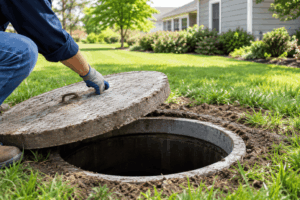
Most costly septic problems don’t start with a failing tank. They start with poor access. Every inspection, pumping visit, or maintenance call takes longer when a technician has to dig around the yard just to find the lid. Over the years, repeated digging adds labor costs, damages landscaping, and turns a routine visit into a bigger project than it needs to be.
A septic tank riser doesn’t change how your system treats wastewater. What it does is make a healthy system far easier to look after. For homeowners across Mount Vernon, Stanwood, Oak Harbor, and Sedro Woolley, where wet ground and shifting soil are common, that kind of easy access can save real time and money down the road.
Quick Take: A riser won’t improve how your septic system functions underground. It improves how quickly and safely professionals can reach it.
What Exactly Is a Septic Tank Riser and How Does It Work?
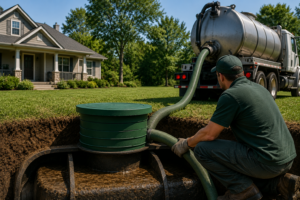
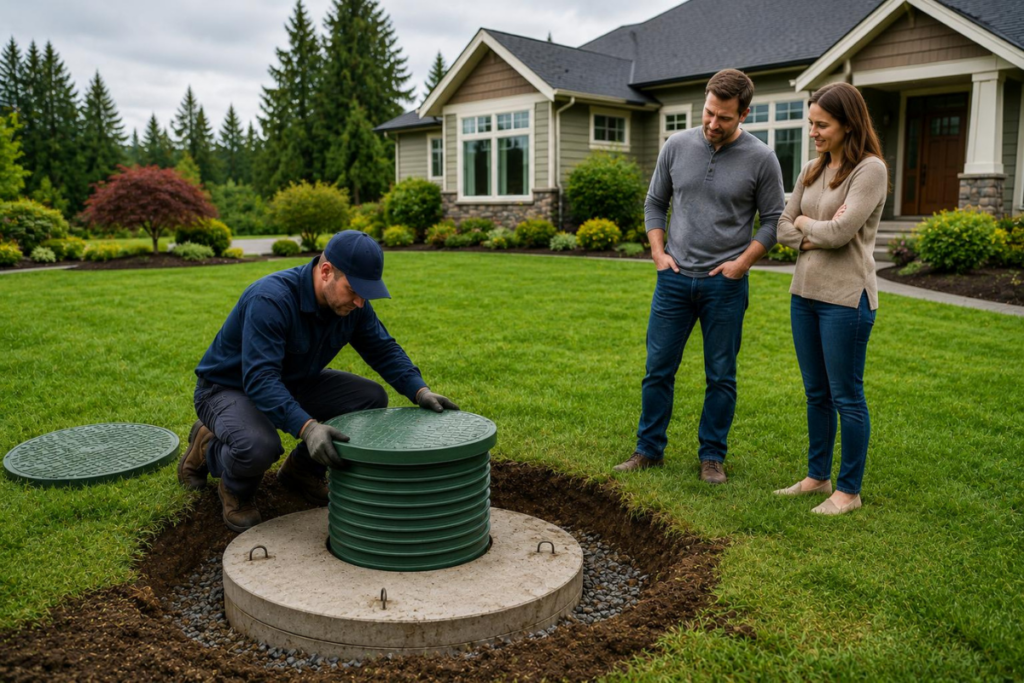
A riser is essentially an extension that brings your tank’s access point up to ground level. Without one, a crew may need to dig through inches, sometimes feet, of soil before they even reach the lid. With septic tank access risers in place, that opening stays right at the surface, protected by a secure cover.
| Without a Riser | With a Riser |
| Access lid stays buried | Lid sits at ground level |
| Digging needed for most visits | Little to no digging required |
| Landscaping often disturbed | Yard stays mostly untouched |
| Longer service appointments | Faster, more efficient visits |
Gateway Septic Service notes that properly installed septic system risers make maintenance easier, help technicians find the tank faster, enable more complete inspections, and reduce the risk of water entering the tank.
Why Install Risers If the Septic System Is Already Working?
Routine Maintenance Becomes Easier
Every system eventually needs inspection or septic tank cleaning. When the lid is already accessible, that visit moves faster for everyone involved.
Protecting Your Landscaping
Gardens, walkways, and mature shrubs often sit right above a buried tank. Digging around them again and again takes a toll. A riser keeps your lawn, flower beds, and irrigation lines out of harm’s way.
Encouraging Regular Maintenance
There’s a practical side to this too. When service is simple, homeowners are more likely to keep up with it rather than put it off. The EPA recommends that most septic systems be inspected every 3 years, with pumping typically needed every 3 to 5 years, depending on household size (EPA.gov).
Did You Know? More than one in five U.S. households rely on an onsite septic system, which is part of why the EPA treats regular upkeep as a public health matter, not just a homeowner’s chore (EPA.gov).
The Hidden Costs of Skipping a Septic Tank Riser
A buried lid is easy to forget about until service is due, and that’s usually when the costs start piling up.
- Digging is required at nearly every visit
- Extra labor to locate the lid
- Landscape repair after excavation
- Longer appointment times
- Slower response during urgent situations
If wastewater starts backing up into the house, the last thing you want is a crew spending precious time hunting for the access lid before they can even begin diagnosing the problem. Easy access means they can get straight to work.
Making Septic Tank Maintenance Simpler for Years to Come
Every maintenance visit, no matter how routine, comes down to the same starting point: getting into the tank. What a technician can actually check often depends on how easily they can reach it.
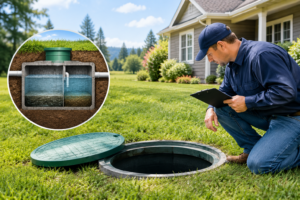
A typical septic tank maintenance visit includes:
- A full system inspection
- Measuring sludge and scum levels
- Checking the tank’s overall condition
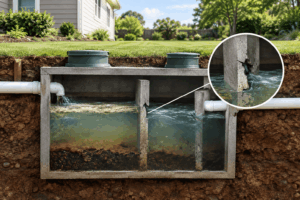
- Reviewing baffles and inlet/outlet components
- Deciding whether pumping is needed
| Without Easy Access | With a Riser in Place |
| Time spent locating and uncovering the lid | Technician can begin work immediately |
| Inspection may be rushed to save time | Full inspection completed without delay |
| Sludge and scum levels checked quickly | More thorough, unhurried evaluation |
| Water infiltration is harder to catch | Reduced risk, easier to spot early |
Gateway Septic Service notes that risers also help reduce water infiltration into the tank, which means technicians aren’t just getting in faster; they’re getting a clearer, more accurate read on the system’s condition each time they visit.
When Does Installing a Septic Tank Riser Make the Most Sense?
Older Septic Systems with Buried Access Lids
Many older systems were installed before risers were standard. Years of settling soil and landscaping changes can make the lid nearly impossible to find without a shovel and some guesswork.
Properties with Extensive Landscaping
Gardens, stone paths, retaining walls, and established lawns add value to a property, but they also complicate access. A riser protects that investment from repeated digging.
Homes That Require Frequent Septic Tank Cleaning
Larger households or properties with heavier water use tend to need more frequent service. In these cases, a septic tank riser installation pays off faster simply because technicians are onsite more often.
Can a Septic Tank Riser Make Future Septic Tank Repairs Easier?
A riser won’t prevent mechanical failures or aging components from causing problems, but it does remove one obstacle from the process: finding the tank. That matters most when something needs urgent attention.
| Service Situation | Without a Riser | With a Riser |
| Routine inspection | Lid must be located and dug up | Immediate access |
| Pumping visit | Extra excavation time | Faster turnaround |
| Septic tank repair diagnosis | Digging delays inspection | Evaluation starts right away |
| Landscaping | May be disturbed | Stays largely intact |
For homes in Mount Vernon, Stanwood, Oak Harbor, and Sedro Woolley, where seasonal rain can leave the ground soft for weeks, having a clear path to the tank means less guesswork and faster answers.
Common Misconceptions About Septic Tank Risers
A few myths tend to come up whenever risers are discussed, so it’s worth setting the record straight.
- “If my system works, I don’t need one.” A working system doesn’t require a riser, but installing one isn’t about fixing a problem. It’s about making future service simpler.
- “Risers increase the risk of leaks.” A properly installed riser creates a sealed connection between the tank and lid, which actually helps keep surface water out.
- “Only old systems benefit.” Newer tanks benefit just as much when it comes to faster, easier access during routine visits.
- “It’s only worth it once repairs are needed.” Waiting usually just means more years of unnecessary digging.
None of these hold up once you look at how a riser actually functions, which is why the upgrade tends to make sense sooner rather than later.
A Quick Checklist Before Deciding
- Is your septic lid buried underground?
- Does locating it take extra time during visits?
- Has digging been required in the past?
- Do you want to protect your landscaping?
- Are you planning to stay in your home long-term?
If most of these sound familiar, a conversation with your provider about septic risers is probably worth having.
What the Numbers Tell Us About Preventive Septic Care
| Statistic | Source |
| Over 21 million U.S. households use onsite septic systems. | U.S. EPA – About Septic Systems: https://www.epa.gov/septic/about-septic-systems |
| Septic systems should generally be inspected every 1–3 years and pumped every 3–5 years, depending on household size and use. | U.S. EPA – Frequent Questions on Septic Systems: https://www.epa.gov/septic/frequent-questions-septic-systems |
| Well-maintained septic systems help protect groundwater and public health. | U.S. EPA – About Septic Systems: https://www.epa.gov/septic/about-septic-systems |
| Failing septic systems can release untreated wastewater into groundwater and nearby surface waters, increasing the risk of contamination. | U.S. CDC – Wastewater Resources: https://www.cdc.gov/environmental-health-services/php/water/wastewater-resources.html |
Looking Ahead: Is a Septic Tank Riser a Smart Investment?
A septic system riser won’t change how your system works below ground, but it can change how manageable that system is to own. Faster inspections, easier pumping, and less disruption to your yard add up over the years, especially for homeowners planning to stay put for a while.
If you’re weighing whether septic tank risers make sense for your property, Gateway Septic Service can assess your setup and walk you through the options. We provide septic tank pumping, inspections, tank riser installations, and repair services throughout Skagit County, including Mount Vernon, Stanwood, Oak Harbor, and Sedro-Woolley. Reach out to schedule an evaluation at 360-826-5520 and find out if septic tank riser installation is the right move for your home.