
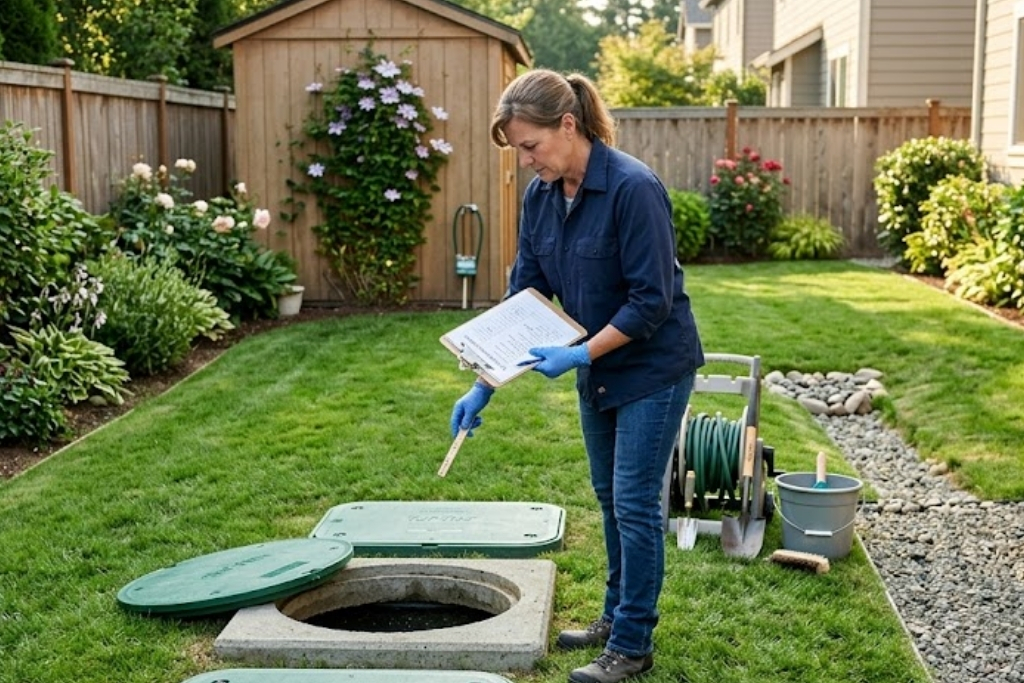
Your septic system has been doing its job quietly underground, and that silence is what makes it so dangerous. Most homeowners only think about their septic system when they can see that something is wrong. By that time, the damage has been going on for months or even years. If you don’t pay attention to the early signs, you could end up with contaminated soil, sewage backing up into your house, and a repair bill that could have been avoided.
At Gateway Septic, we’ve seen this happen more times than we’d like, and we’re here to make sure it doesn’t happen to you.
This blog is your complete septic tank care guide, covering the hazards to watch for, the habits silently damaging your system, and the maintenance practices that keep everything running cleanly.
Why Septic Tank Safety Is Important
Most homeowners don’t think about their septic system until the drains back up or the yard starts to smell. That way of thinking costs a lot.
A broken system doesn’t just affect your property. Sewage that isn’t treated seeps into groundwater nearby, spreads to wells nearby, and flows into local waterways. The EPA’s list of documented septic-related groundwater threats includes pathogens and nitrates. Septic system safety protects your family’s health, your neighbors’ water, and the local environment. Once damage reaches your drain field or groundwater, reversing it is neither quick nor inexpensive.
Why Most Septic Failures Start Underground and Go Unnoticed
One thing that makes septic problems so annoying is that they start long before you can see them.
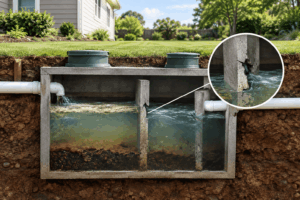
A cracked baffle, a drain field that is too full, or a distribution box that is slowly clogging up do not show obvious signs right away. Septic failure often starts gradually and can seem normal for years, until it finally becomes clear that something is seriously wrong. By the time you smell sewage or see soggy patches of grass, the system has been struggling for a long time.
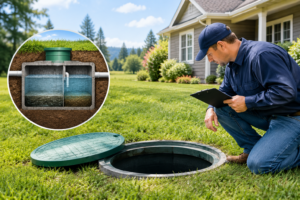
Routine inspections allow trained professionals to evaluate tank levels, check connections, and catch irregularities before they become costly failures.
The most expensive septic repair is always the one that could have been caught a year earlier.
Common Septic Tank Hazards to Be Aware Of
Understanding what you are dealing with is where every list of septic tank safety tips should begin. These systems are very dangerous, and people often don’t realize how serious they are.
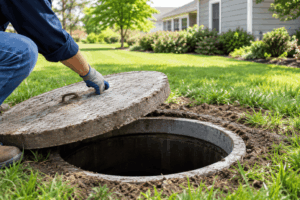
- Toxic Gas Buildup: Septic tanks produce methane and hydrogen sulfide, both deadly in confined spaces. Never open or inspect your tank without professional equipment.
- Structural Collapse: Cracked or missing tank lids are a physical danger to anyone walking nearby, particularly children.
- Sewage Backup: When a system is clogged or full, sewage has nowhere to go except back into your home or up through your yard.
- Groundwater Contamination: Sewage can enter groundwater without any visible sign, carrying pathogens that make water unsafe for drinking and agricultural use.
Essential Septic Tank Safety Tips
Smart septic system maintenance doesn’t require much; all you need to do is develop the right habits and stick to them.
| Safety Practice | Why It Matters |
| Pump the tank every 3–5 years | Prevents solids buildup and drain field overflow |
| Schedule professional inspections every 1–3 years | Catches structural issues before they escalate |
| Never open tank lids without a professional | Prevents toxic gas exposure |
| Keep heavy vehicles off the system area | Prevents structural damage |
| Redirect roof drainage away from the drain field | Prevents hydraulic overload |
| Plant only grass above the drain field | Prevents root intrusion into pipes |
The EPA recommends septic inspections every one to three years, not just when buying or selling a property.
The Everyday Products That Are Secretly Harming Your Septic System
This is something that most homeowners don’t know, and it explains why so many “well-maintained” systems still break down.
Beneficial bacteria are what septic systems use to break down waste. When bad things get into the tank, they throw off this balance and make the system more likely to fail. Here’s what you probably already have in your house:
- Chemical drain cleaners: These kill beneficial bacteria and corrode system components. Opt for a plunger or baking soda and vinegar as a safer alternative.
- Antibacterial soaps and disinfectants: Designed to kill bacteria, including the bacteria your tank depends on. Regular use accelerates sludge buildup.
- “Flushable” wipes: These do not break down in the tank. They accumulate in pipes and create blockages that reduce system efficiency.
- Cooking grease and oils: These solidify in pipes and tanks, restricting wastewater flow and causing persistent clogs.
- Prescription medications: Antibiotics, in particular, destroy the bacteria the system relies on to process waste.
Just two gallons of chlorine bleach can kill all functioning bacteria in a 1,000-gallon septic tank. That’s how fast a cleaning habit turns into a repair bill.
What Not to Do with Your Septic System
Some actions, in addition to harmful products, put the whole system at risk. These are non-negotiables in any septic tank care guide:
- Never flush wipes, feminine hygiene products, cotton swabs, or paper towels
- Never pour grease, paint, solvents, or pesticides down any drain
- Avoid running multiple high-water appliances at the same time
- Never park vehicles or plant deep-rooted trees over the tank or drain field
- Never ignore a running toilet, even a slow leak, consistently overloads the drain field over time
Warning Signs of Septic System Problems
If your system is struggling, it will show signs. Most homeowners simply don’t know what to look for.
- Slow drains across multiple fixtures, not just one sink
- Gurgling sounds from toilets or drains after flushing
- Sewage odors indoors or in the yard
- Wet, spongy ground near the drain field without recent rainfall
- Greener-Than-Normal Grass Over Your Septic System
- Sewage surfacing in the yard
When the weather is dry, bright green, spongy grass over the drain field is a strong sign that water is leaking underground. It looks harmless. It is not. If you are noticing two or more of these signs in Mount Vernon, Stanwood, Oak Harbor, or Sedro-Woolley, do not wait. The longer you delay, the worse and more expensive the outcome.
Maintenance Tips to Prevent Costly Repairs
Consistent septic tank maintenance tips are what separate a 20-year system from a 10-year one.
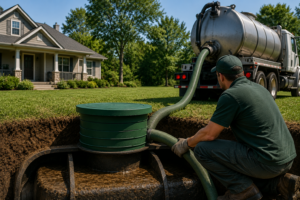
- Pump on Schedule: You have to pump every three to five years. If you skip it, solids can overflow into the drain field, which would have been completely avoided with regular maintenance.
- Conserve Water Daily: Every septic system is designed for a specific daily wastewater load. Consistently exceeding that limit forces water to back up or surface in the yard. Spread laundry loads across the week, fix dripping faucets promptly, and consider low-flow fixtures.
- Protect the Drain Field: Keep it clear of heavy equipment, deep-rooted plants, and surface water runoff. A saturated drain field is one of the most expensive repairs a homeowner faces, and it is almost always preventable.
When to Call a Professional
Do not attempt DIY fixes for any of the following situations:
- Sewage backup into the home
- Persistent odors after basic checks
- Soggy ground or standing water near the drain field
- Tank not pumped in over five years
- Pre-purchase property inspection
- Any planned construction or landscaping near the system
Take Action Before Your Septic System Forces You To
Not paying attention to your septic system is not a neutral choice; it is a risk that grows every day without you knowing it. Every septic system safety habit covered in this blog takes minimal effort but delivers years of protection for your home, your family, and your property value.
At Gateway Septic, we have been serving homeowners across Mount Vernon, Stanwood, Oak Harbor, and Sedro Woolley since 1976, with over 45 years of hands-on experience in inspections, pumping, repairs, and full system installations. We bring transparent pricing, fast response, and genuine care to every job. When you call us, you are not calling a faceless service company; you are calling neighbors who take your septic system maintenance as seriously as their own.
Call Gateway Septic today at 360-826-5520. The best time to protect your septic system was five years ago. The second-best time is right now.