
The number at the bottom of a septic estimate is only the last line of a much longer story, and most of that story is written underground. Two homes can report the same slow drain, yet one repair plan turns out far larger than the other because the pipe leading to the tank was installed in a different decade and made of a different material.
That is why what affects septic repair cost so often comes back to age and septic pipe material types. Homes in Mount Vernon, Stanwood, Oak Harbor, and Sedro Woolley were built across many eras, and the buried line usually reflects that era more honestly than the siding does.
In this blog post, we explain how pipe age and material shape septic repair costs so that you can read your estimate with confidence.
Why One Septic Repair Estimate Can Look Completely Different From Another
It is natural to assume a broken pipe costs about the same everywhere. In practice, septic repair cost shifts with the conditions around the break as much as with the break itself.
Factors That Commonly Affect Pricing
- Pipe material and age
- Depth and accessibility
- Existing damage and root intrusion
- Soil conditions
- Length of the affected pipe
- Availability of replacement parts
Quick Comparison
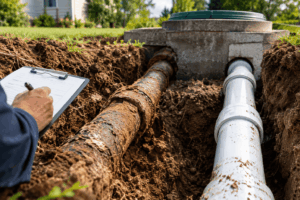
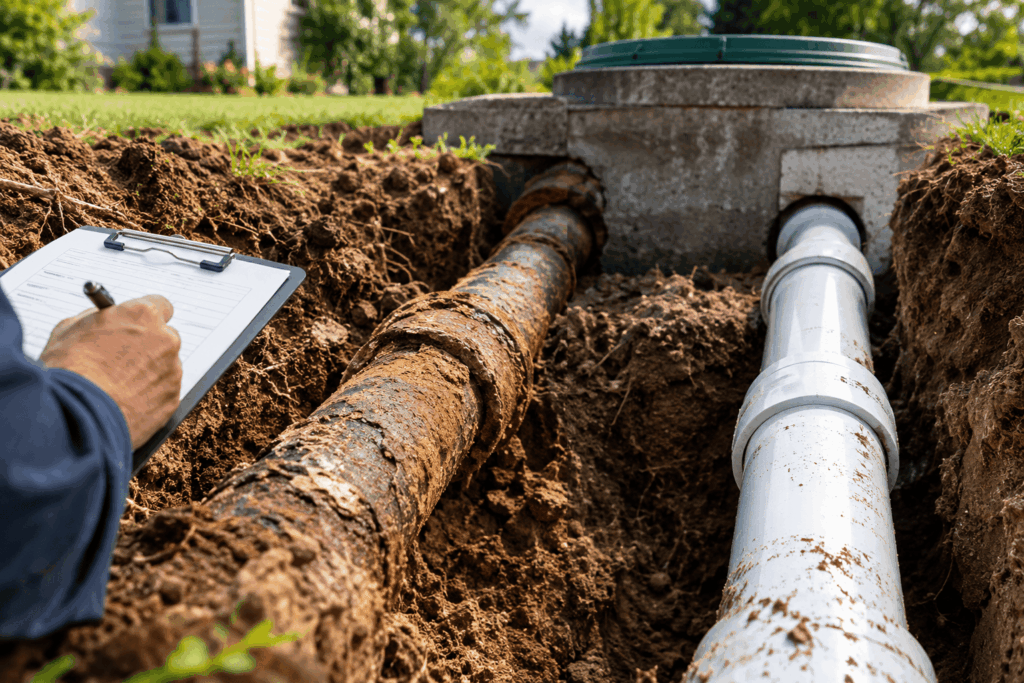
- Modern PVC with localized damage: often a more contained repair
- Older cast iron with corrosion: more evaluation before work begins
- Orangeburg showing collapse: replacement may enter the conversation
- Clay with root intrusion: wider excavation is possible
- Several damaged sections: a larger scope overall
The material often determines whether a job stays a repair or becomes a replacement, which is a major part of any septic pipe repair cost.
A Brief History of Septic Pipe Materials and Why It Matters Today
Many systems across Skagit County went in decades ago, so the year a home was built offers a useful clue about what lies below the yard.
Septic Pipe Material Timeline
| Approximate Era | Common Materials | What Tends to Show Up Later |
| Pre-1970s | Clay tile, cast iron | Cracked joints, roots, corrosion |
| 1950s to 1970s | Orangeburg | Flattening and collapse |
| 1980s to present | PVC, ABS | Fewer material-related concerns |
Age alone doesn’t determine a pipe’s condition, but older materials tend to bring more surprises during a repair. These are the classic old septic pipe problems that crews watch for.
Clay and Cast Iron (Pre-1970s Homes)
Both materials were standard for their time and have a long service record.
Clay Pipe Characteristics
Clay resists corrosion, but decades of soil movement can crack it or pull the joints apart. Roots are drawn to moisture escaping through those small gaps and push in from there.
- Cracking
- Joint separation
- Root intrusion
Cast Iron Pipe Characteristics
Cast iron is known for its strength, yet internal corrosion builds slowly and narrows the flow.
- Rust buildup
- Restricted flow
- Corrosion-related leaks
In some cases, cast iron septic pipe repair is a sensible option. Heavy deterioration, however, can make full replacement the better long-term choice.
Orangeburg Pipe (1950s-1970s): The Material That Raises the Most Questions
Orangeburg was made from compressed layers of wood pulp and asphalt and sold as a lightweight, affordable option. Real-world performance has been less kind because the material tends to soften and lose its shape as it ages.
Why Orangeburg Often Creates Concerns
- Flattening and deformation
- Internal collapse
- Root intrusion
- Reduced flow
Quick Tip: If your property has Orangeburg, ask about the condition of the whole line before agreeing to a spot repair. A fix in one section may not address wear elsewhere.
PVC and ABS (1980s-Present)
Newer systems generally use PVC or ABS, which offer smooth interiors, corrosion resistance, and readily available parts. Repairs tend to be more straightforward, though that doesn’t guarantee a small job every time.
What We Commonly Discover After Excavating Older Septic Lines
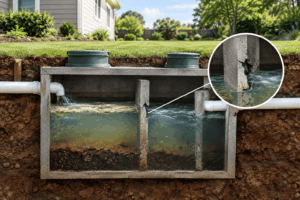
A surface symptom rarely tells the whole story, and the full picture often appears only once the pipe is exposed. Gateway Septic offers sewer and septic line camera services that let a technician see inside the line and pinpoint the issue instead of guessing.
What We Expect vs. What We Find
- Slow drains: sometimes a partially collapsed pipe
- Frequent backups: often root intrusion
- Wet spots in the yard: a separated joint
- Septic odors: cracked piping
Recurring blockages: more than one damaged section
Older materials that have lived through decades of soil movement and wet seasons are especially prone to this. Around Mount Vernon, Stanwood, and Sedro Woolley, saturated ground can put extra stress on aging lines.
Story From the Field
A typical call begins with an occasional backup and an assumption that a simple clog is to blame. Once the line is exposed, roots may run several feet, cracks may appear in more than one place, and nearby sections may show corrosion or deformation. A small repair can become a larger conversation about the line’s overall reliability, which is why a full evaluation beats looking only at the most obvious symptom.
How Pipe Age Directly Affects the Estimate You Receive
Anyone asking for a septic repair estimate breakdown will find pipe age near the top of the list, since it shapes both the scope of the work and the labor involved.
Why Older Pipes Can Push Costs Up
- More digging into the problem first: With older pipes, a plumber usually has to look closer before quoting anything. They’re checking how bad the condition is, how much life it has left, and whether the sections next to it are also on their way out.
- Excavation gets messier: Old properties often come with missing records, layouts nobody remembers, and repairs someone did years ago. All of that means more time and labor on site.
- Old meets new, and it’s not always a clean fit: Connecting modern pipe to an old line can take extra planning and special fittings to make the joint hold.
- Fragile pipe means surprises: Aging pipe breaks easily, and digging close to it can turn up other problems that need fixing in the same job.
What Usually Affects the Price?
- Pipe material: decides which repair options you actually have
- Pipe age: tells you how much you can trust the line going forward
- Access: harder-to-reach pipe means more hours of labor
- Damage severity: the worse it is, the bigger the job gets
- Length of pipe affected: more pipe means more materials and more digging
Together, these explain why septic pipe repair cost differs so much from one property to the next.
When Replacement Makes More Sense Than Repair
Sometimes a targeted repair solves the problem. Other times it only postpones a larger one.
Situations Where Replacement May Be Worth Discussing
- Extensive corrosion
- Repeated failures
- Pipe collapse
- Widespread root intrusion
- Aging Orangeburg
- Several damaged sections
Repair vs. Replacement Comparison:
| Consideration | Repair | Replacement |
| Project scope | Smaller and targeted | Larger, covering the full run |
| Time on site | Usually shorter | Usually longer |
| Long-term reliability | Depends on the rest of the pipe | Typically improved |
| Chance of repeat visits | May remain | Often reduced |
This is where septic line repair vs. replacement cost deserves a longer view. The choice that looks simplest today isn’t always the one that best serves a household over the next decade.
Common Warning Signs That May Point to Pipe Damage
Watch for These Potential Indicators
- Slow-draining sinks and tubs
- Frequent drain backups
- Unusual septic odors
- Wet areas in the yard
- Unusually green patches of grass
- Gurgling fixtures
- Repeat service calls for the same issue
These are the most common signs of septic pipe damage homeowners report before an inspection. The CDC notes that malfunctioning septic systems can contaminate groundwater and surface water, which is why prompt attention matters. The EPA also advises inspecting the average household system at least every three years so problems can surface early.
Before You Call for an Estimate: A Homeowner Checklist
A little preparation makes an evaluation far more productive.
Helpful Information to Gather
- Approximate age of the home
- Previous septic records
- Past repairs and pumping history
- Where symptoms appear
- Recent landscaping projects
Screenshot-Friendly Checklist
- Do you know the age of your septic system?
- Have repairs been done before?
- Are backups becoming more frequent?
- Has the same problem returned?
- Do you have records of past inspections?
The more you can share, the more accurate the estimate tends to be.
Looking Beyond the Pipe: Understanding the Bigger Picture
A septic repair estimate breakdown is much easier to read once you know what sits beneath the yard. Septic pipe material types like clay, cast iron, Orangeburg, and PVC each bring their own challenges, and knowing the difference is a big part of understanding what affects septic repair cost. Old septic pipe problems, such as cracks, root intrusion, and collapsed sections, also shape the septic line repair vs. replacement cost conversation, since a short fix isn’t always the smarter long-term choice. That’s why a cast iron septic pipe repair can look very different from a PVC repair, and why septic pipe repair cost varies so much from one property to the next.
Slow drains, gurgling sounds, and soggy spots in the yard are common signs of septic pipe damage, and catching them early can keep your overall septic repair cost down. Since 1976, Gateway Septic has offered pumping, inspections, maintenance, repairs, and sewer and septic line camera services to homeowners in communities including Mount Vernon, Stanwood, Oak Harbor, and Sedro Woolley.
If you notice pipe trouble, call 360-826-5520 to schedule service and get a free estimate for your property.