
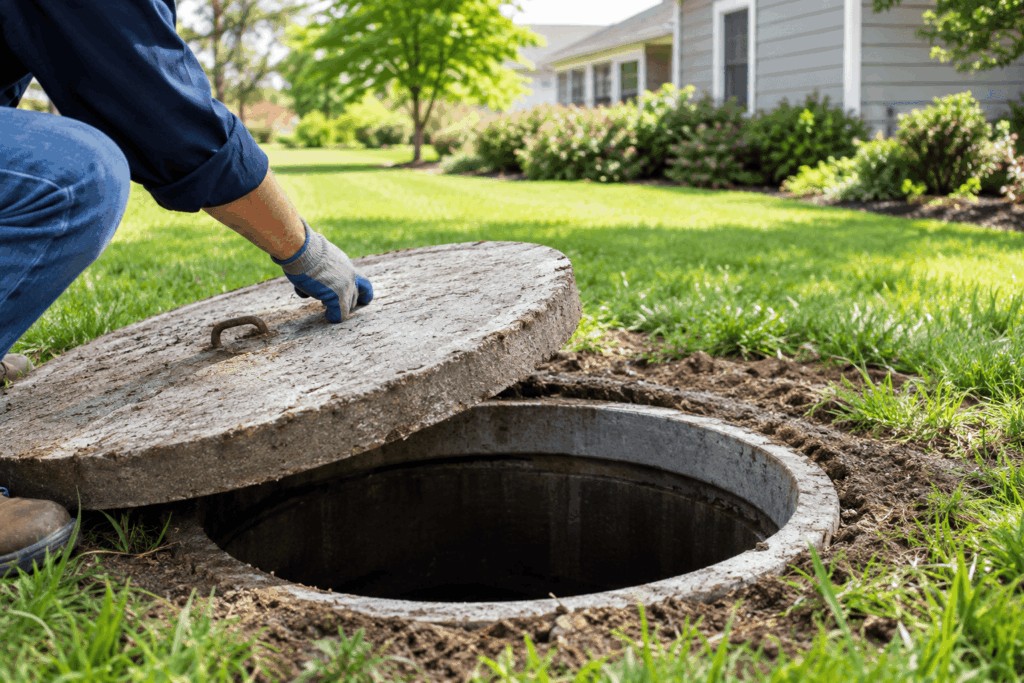
A septic tank lid failing rarely announces itself. Water, gas, or a small animal gets through that gap first, not a warning light or sudden noise, just a slow change in seal, position, and material strength that most homeowners never notice. By the time the signs appear above ground, the damage below it is often months in the making. At Gateway Septic Tank Services, we treat every lid issue as the first indicator of a system that needs closer attention, because it almost always is.
This guide gets specific: what the lid is designed to do, what Washington’s own septic code demands of it, and what happens mechanically once that seal is broken. We’ll cover the warning signs worth acting on, what our technicians check during a visit, and how a septic tank lid problem left alone turns into a repair that reaches well past the cover itself.
Why a Septic Tank Lid Is More Important Than It Looks
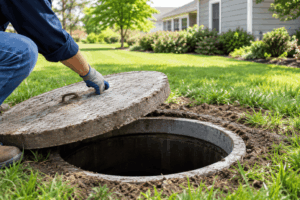
The lid does one job with zero margin for error: keep the tank’s contents, gases, and structure completely separate from everything above ground. Washington’s code for on-site sewage systems doesn’t permit access risers and lids as optional add-ons; they must be at least twenty-three inches in diameter and strong enough to structurally handle the particular load conditions of the site, whether it’s foot traffic, a mower, or a parked vehicle.
That’s a higher bar than most homeowners assume. A septic tank lid isn’t just a cap; it’s a load-rated safety component with a legal specification behind it, which is exactly why a hairline crack matters more than it looks like it should.
How a Damaged Septic Tank Lid Can Lead to Bigger Problems
A damaged septic tank lid sets off changes that aren’t visible from the surface. There are two other mechanisms that are often overlooked: chemical and regulatory, not just physical.
Hydrogen Sulfide Slowly Corrodes Concrete Lids From Inside
Septic gas contains hydrogen sulfide. This combines with moisture on the bottom of a concrete lid and becomes sulfuric acid, which gradually eats the concrete. This means a cracked septic tank lid is often the result of years of internal corrosion, not sudden damage; the crack is a symptom that shows up long after the weakening began.
An Open or Unsecured Lid Is Legally a Confined Space
The inside of septic tanks is considered permit-required confined spaces under OSHA’s confined-space standard, and the diameter of the riser directly impacts whether a service issue requires non-entry or entry rescue procedures. A broken septic tank lid isn’t just a system defect; it changes the legal safety classification of the site itself.
What Happens When a Septic Tank Lid Is Not Properly Sealed?
Once the seal fails, three separate problems start developing at the same time: hydraulic, atmospheric, and structural. Each one compounds the others the longer the septic tank lid damage goes unaddressed.
Groundwater Infiltration Can Increase the Tank Load
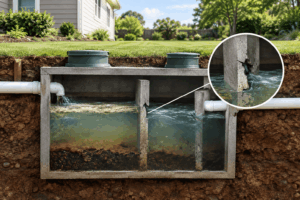
Water entering through a compromised seal adds volume the tank was never designed to contain. Every gallon of unplanned inflow extends the time required for solids to settle before effluent is released to the drain field, moving partially treated waste further into the system than planned.
Odors Can Escape Around a Poorly Sealed Lid
A correctly fitted lid contains gas along with liquid. Once the seal is gone, hydrogen sulfide and methane escape upwards, often noticeable as a sulfur smell that increases after rainfall or on warm, still days.
Insects and Other Unwanted Pests May Gain Access
The tank’s warmth and moisture attract rodents and insects. A gap around the rim gives them a direct route in, and an infestation at the lid frequently spreads to nearby structures before anyone connects it back to a septic tank cover problem.
A lid can look completely intact from three feet away and still have failed underneath, which is exactly why visual checks alone miss most early damage.
Signs Your Septic Tank Lid May Need Attention
Most septic tank lid problems give off measurable indicators well before failure. Knowing what to look for is the difference between a scheduled repair and an emergency call.
Cracks, Gaps, or Visible Damage Around the Lid
Hairline cracks around the rim, chipped concrete edges, or visible daylight through a seam all point to a compromised seal, even when the surrounding yard shows no other signs of trouble.
A Lid That Sits Below or Above the Ground Level
Soil settling can change a lid’s position over time. Washington’s code has particular structural and diameter standards for risers precisely because a misaligned lid is both a compliance issue and a candidate for septic tank lid replacement.
Unusual Odors or Wet Areas Around the Tank
If you see soggy ground or a constant sulfur smell near the tank site, that’s no accident. Injuries happen every year from people falling through crumbled tanks or unsecured lids, county health departments note, and drainfield failures and surfacing sewage can make residents sick, both of which usually trace back to a lid or seal issue first.
| Comparison | DIY Observation | Professional Inspection |
| What’s checked | Surface cracks, obvious gaps | Seal integrity, riser alignment, structural load rating |
| Tools used | Visual check only | Depth probing, pressure and load assessment |
| Code compliance | Not verified | Checked against WA on-site sewage standards |
| Outcome | Identifies visible symptoms | Identifies root cause before it spreads |
What Washington State Requires for Septic Tank Lids and Riser Covers
Washington doesn’t leave guessing to the lid specs. Standards are enforced by local health jurisdictions throughout the state. For example, the newer tanks must have risers with a minimum diameter of 24 inches, constructed of durable, non-corrosive, UV-resistant material. This is because a substandard cover poses a measurable risk.
This becomes even more important at the point of a home sale. Washington and a few other states have point-of-transfer inspection requirements, meaning a property can only pass if it has an accessible, code-compliant lid. For homeowners across our Skagit County service area- Mount Vernon, Stanwood, Oak Harbor, and Sedro Woolley– that means a septic tank cover problem can directly delay or derail a sale if it isn’t resolved beforehand.
Puget Sound’s marine recovery areas add another layer: parcels near sensitive waterways face stricter inspection cycles and mandatory operation and maintenance contracts aimed at reducing nitrogen and bacteria loads from failing septic systems. A failed lid that allows infiltration works directly against those requirements.
How a Septic Tank Lid Problem Can Become an Expensive Repair
Once neglect takes hold, septic tank lid replacement rarely remains isolated. Water kept leaking in, gas corroded the baffles and distribution components attached to that same access point, and the structural stress didn’t stop at the edge of the lid.
We’ve seen this pattern often enough that it’s become a rule of thumb: catching a septic tank cover repair early is almost always simpler and less disruptive than what follows six months of ignoring it. The tank doesn’t fail all at once. It fails in stages. The lid is the first stage.
What a Septic Professional Checks Around the Tank Lid
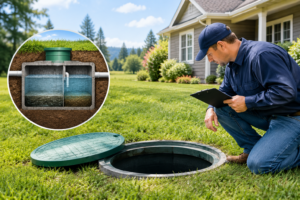
A real septic tank lid inspection goes past a glance from ground level. Our technicians verify structural and code compliance together, not separately.
During a visit, we check:
- Seal integrity and any active water intrusion.
- Riser diameter and material against current WA standards.
- Structural load rating relative to site traffic and use.
- Alignment with the tank opening and surrounding collar condition.
- Overall fit against current ground level and grading.
This is also where septic tank lid repair decisions get made, whether a resealing and hardware fix is sufficient, or whether full replacement is the safer long-term call.
Protecting Your Property Starts at the Lid
A septic tank lid carries more responsibility than its size suggests; it’s a code-regulated, load-rated barrier against water intrusion, gas escape, pest access, and structural failure, and Washington’s own regulations treat it that way. Left unaddressed, a damaged septic tank lid doesn’t stay a small issue; it compounds into infiltration, odor, compliance problems, and eventually a repair that reaches the components connected to it.
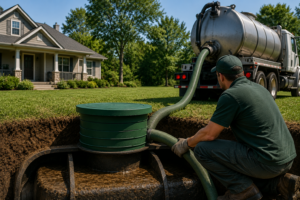
At Gateway Septic Tank Services, lid and cover work is part of our full range of septic services, alongside inspections, pumping, and system installation. We evaluate every lid against current Washington standards, not just visible wear, so the fix addresses the actual cause rather than the symptom on the surface.
If you’ve noticed cracking, shifting, odor, or any sign pointing toward septic tank cover replacement, don’t leave it for the next inspection cycle. Call us at 360-826-5520 to schedule a proper evaluation before a manageable issue turns into a much larger one.