
Most homeowners treat their septic system the way they treat their foundation; they assume it’s holding up and never check until something goes wrong. The difference is that a foundation doesn’t back up into your bathroom. A failing septic system does, and when it reaches that point, the consequences go well beyond a bad smell. You’re looking at contaminated groundwater, a yard that poses genuine health risks, and a repair scope that expands with every week action is delayed.
Gateway Septic has been working with homeowners across Skagit County since 1976, and the most expensive jobs we handle are almost always the ones where the warning signs were present long before the call came in.
This blog covers what you need to understand about a septic system approaching the end of its life: how long tanks actually last, what the warning signs mean, how professionals decide between repair and replacement, and what you can do now to extend your system’s life.
Understanding the Typical Lifespan of a Septic Tank
Your septic tank’s lifespan is determined by three variables working together: tank material, maintenance history, and surrounding soil conditions.
| Tank Material | Average Lifespan |
| Concrete | 40+ years with proper maintenance |
| Fiberglass / HDPE | 30–40 years |
| Steel | 20–25 years (highly prone to corrosion) |
Steel tanks are the most underestimated risk; corrosion develops from the inside out, meaning visible failure signs appear only after structural integrity is already compromised. Concrete lasts longest but cracks under consistent overloading or soil movement. Knowing your tank’s material and age is the foundation of any honest assessment of your system’s condition.
Early Warning Signs Your Septic Tank Is Failing
Septic tank failure rarely happens suddenly. It develops over time through specific, physical signals that are easy to misread until they become impossible to ignore. Here is what each sign actually means.
Slow Drains and Frequent Backups
A single slow drain is usually a localized pipe issue. When multiple fixtures, such as toilets, sinks, and showers, are all backing up simultaneously, the problem is system-wide. It typically means the tank is full, the outlet is blocked, or the drain field has lost its absorption capacity.
Sewage Odors Inside or Outside Your Home
A functioning septic system contains all odors completely. When hydrogen sulfide gas begins escaping through indoor drains or rising from the ground near the tank, it signals that gases are no longer being properly contained, a structural issue, not a temporary one.
Wet or Soggy Areas Near the Drain Field
Saturated ground over the drain field during dry weather is one of the most serious signs of septic tank failure. It means the soil has reached capacity and can no longer treat the effluent being sent to it. Every week of inaction at this stage widens the scope of remediation required.
Unusually Green Grass Near the Drain Field
A noticeably lush strip of grass directly over the drain field is not a lawn care win, it means partially treated wastewater is surfacing below ground and fertilizing the grass from underneath. It is evidence that the system is no longer containing waste where it should be.
If your drain field is already saturated, pumping the tank will not fix the problem. It is one of the most common and costly misconceptions in septic maintenance, and it delays the real solution while the damage continues.
Repair vs. Replacement: How Professionals Decide
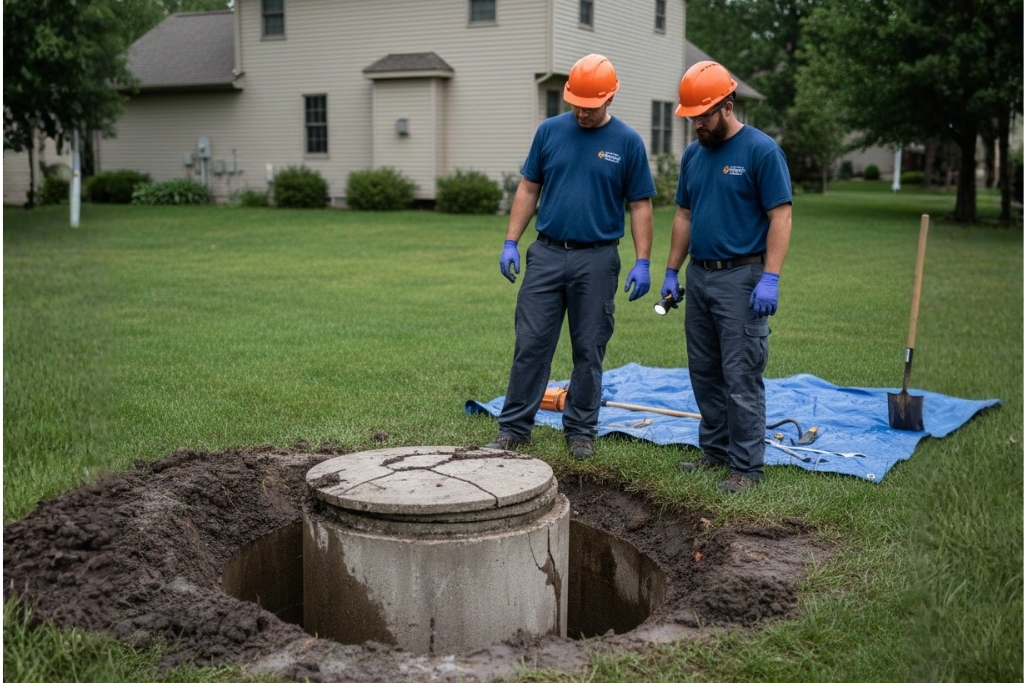
The septic tank repair vs. replacement decision cannot be made from the surface. It requires a proper septic inspection to evaluate the tank, distribution system, and drain field together, because a problem in one area almost always affects the others.
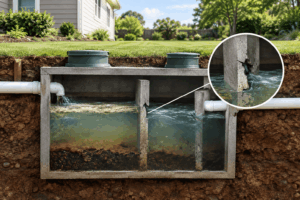
Repair is appropriate when the issue is isolated and the tank remains structurally sound, such as a cracked baffle, a damaged outlet pipe, or a minor drain field disruption. Septic system replacement becomes necessary when the tank is structurally compromised, the drain field is unrecoverable, or the system has exceeded its septic tank lifespan to the point where further repairs only delay an unavoidable outcome.
The pattern we see most often is homeowners choosing repeated repairs to avoid the short-term disruption of replacement; ultimately spending far more while living with an unreliable system throughout.
Risks of Ignoring an Aging Septic System
The consequences of leaving a failing system unaddressed are specific and predictable.
- Groundwater contamination: Untreated effluent migrating through soil reaches groundwater sources. Under the Puget Sound Clean Water Act, which governs inspection requirements in Skagit County, a leaking system carries both environmental and legal consequences.
- Direct health exposure: Raw sewage contains pathogens, including E. coli, Salmonella, and Hepatitis A. When effluent surfaces in a yard or backs up into a home, household exposure is immediate and serious.
- Property damage: Persistently saturated soil compromises driveways, landscaping, and in serious cases, structural elements of the home.
- Home sale complications: Washington State requires a septic inspection for every property sale involving a septic system. A failed system discovered at that stage can derail the transaction entirely.
A septic system does not fail all at once. It fails in stages; and each stage that goes unaddressed compounds the damage and narrows your options.
What to Expect During Septic Tank Replacement
The septic tank replacement process follows a defined sequence: site assessment, permitting, excavation and removal of the old tank, installation of the new system, and a final inspection before the site is closed. Nothing moves forward until the previous step is completed correctly. Whether the replacement involves a standard gravity system or a modern pressure system, every installation is done to code.
How to Extend the Life of Your Septic Tank
- Pump every 3 to 5 years: Sludge accumulation is the leading preventable cause of early system failure.
- Stay current on septic inspections: Gravity systems in Washington require inspection every three years under the Puget Sound Clean Water Act; this requirement exists specifically to catch developing problems before they become failures.
- Be intentional about what enters the system: Wipes, grease, medications, and harsh chemical cleaners disrupt the bacterial balance that the tank depends on to process waste.
- Protect the drain field: Avoid parking over it, planting deep-rooted vegetation near it, or directing runoff toward it.
- Consider a maintenance plan: Gateway Septic’s maintenance plans are designed to keep systems running reliably and prevent the conditions that lead to emergency septic service calls in Skagit County.
The Bottom Line on Septic System Longevity
Each warning sign a failing system produces, persistent odors, saturated ground, simultaneous drain issues, surfacing effluent, points to a specific, diagnosable cause with a defined solution. Whether that solution is a targeted repair or a full septic system replacement almost always comes down to how early the problem is identified.
Gateway Septic has been handling everything from routine septic inspections and pumping to complete septic tank replacement and emergency septic service in Skagit County calls since 1976. Homeowners in Mount Vernon, Stanwood, Oak Harbor, and Sedro Woolley trust us because we provide honest assessments and handle the full scope of septic work; one call covers everything.
If your system is showing any of these signs, or if you cannot remember when it was last inspected, do not wait for the situation to escalate. Call Gateway Septic today at 360-826-5520.