
When you’re running a restaurant, managing a bed-and-breakfast, or overseeing an office complex, the septic system is probably the last thing on your mind. As long as toilets flush and drains empty, life goes on.
Here’s the uncomfortable truth: that “out of sight, out of mind” approach can come back to haunt you. Without proper commercial septic system monitoring and maintenance, your wastewater system could be weeks away from a breakdown that forces you to close your doors. We’re talking about raw sewage backups, health department violations, and repair bills that make you wish you’d paid attention sooner.
If you operate a business anywhere around Mount Vernon, Stanwood, Oak Harbor, Sedro Woolley, or the surrounding areas, you need to understand what’s happening beneath your parking lot right now—and what happens when things go sideways.
Why Monitoring Matters for Business Septic Systems
Commercial properties generate far more wastewater than residential homes. Where a typical house serves a family of four, your business might handle fifty customers an hour. That’s constant toilet flushing, handwashing, kitchen operations, and cleaning throughout the workday. The volume alone puts tremendous pressure on your septic infrastructure.
Think about what flows through your system compared to what flows through a home.
Restaurants deal with grease and food particles. Hotels handle laundry detergents and personal care products. Office buildings see concentrated usage during break times. This isn’t just more waste—it’s more complicated waste that challenges your system in ways residential tanks never experience.
Without regular commercial septic system monitoring and maintenance, you’re essentially hoping nothing breaks. That approach works until it catastrophically doesn’t. Monitoring gives you control over several critical areas:
Early detection saves serious money.
A small crack discovered during routine inspection might cost a few hundred dollars to repair. Ignore it, and that crack expands until your entire drain field collapses. Now you’re looking at excavation equipment tearing up your property and a five-figure repair bill.
Compliance protects your license to operate.
Health departments enforce septic regulations for good reason—failing systems create public health hazards. When inspectors find violations, they don’t accept excuses about being too busy to maintain your system. You’ll face fines, mandatory closure until repairs are complete, and in severe cases, license suspension.
Proper maintenance extends system longevity dramatically.
A well-maintained commercial septic system can deliver thirty years of reliable service. Systems that only get attention when something breaks are likely to experience major failures within a decade. The difference between those outcomes is consistent monitoring.
You avoid operational disasters at the worst possible moments.
Imagine your busiest Saturday—lunch service is packed, there’s a wait for tables, and your staff is working at full capacity. Then every drain in your kitchen backs up simultaneously. Raw sewage floods your prep area. You’re calling customers to cancel their reservations while your competitors stay open. This scenario plays out regularly for businesses that gamble on their septic systems.
What Usually Goes Wrong: Causes of Commercial Septic Failures
Most septic disasters follow patterns we’ve seen repeatedly. Understanding these helps explain why septic system monitoring services matter so much:
Your volume exceeds capacity.
Maybe your business is booming. Maybe you expanded without upgrading the septic system. Either way, when usage outpaces the tank’s capacity, you’re headed for trouble.
Nobody remembers the last pumping.
Sludge accumulates continuously at the bottom of your tank. Skip pumping for too long, and that sludge layer grows until there’s barely any room left for actual treatment. Then everything backs up.
The wrong stuff goes down the drains.
Kitchen grease solidifies in pipes. Harsh cleaning chemicals kill the bacteria that break down waste. Laundry lint clogs drain fields. These aren’t just minor annoyances—they fundamentally damage how your system functions.
Things break underground where you can’t see them.
Concrete tanks crack as they age. PVC pipes shift and separate. Tree roots punch through joints searching for water. A delivery truck crosses your drain field and compacts the soil. All of this happens silently.
Water has nowhere to go.
Your drain field relies on soil absorption. Heavy rains saturate the ground. Poor drainage compounds the problem. Suddenly, wastewater can’t disperse, and it starts pooling on the surface or backing up into your building.
| What Goes Wrong | The Underground Reality | What You’ll Experience |
| Too much daily usage | Waste flows in faster than the bacteria can break it down | Backups during busy hours and foul odors your customers will instantly notice |
| Years without pumping | Sludge slowly climbs to 60–70% of the tank instead of the safe 30% | Sudden overflows and sky-high emergency pumping costs, especially on weekends |
| Grease buildup from the kitchen | Thick grease blocks pipes and starves the helpful bacteria that keep the system healthy | Slow drains, failed inspections, and the need for expensive jetting services |
| Cracked tank or broken pipes | Raw sewage leaks into the surrounding soil without being treated | Groundwater contamination, environmental penalties, and a full system replacement |
| Drain field flooding | The soil becomes so saturated it can’t absorb another drop | Sewage bubbling up into your parking lot and the health department forcing an immediate shutdown |
What Exactly Should You Monitor in a Commercial Septic Setup
A thorough septic system inspection for businesses looks at these critical components:
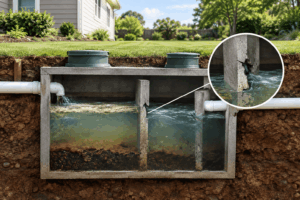
- What’s inside the tank tells you everything. Measure the sludge layer and scum layer. Combined, they shouldn’t take up more than a third of the tank’s depth. Beyond that threshold, you need professional septic tank pumping soon.
- Every connection point deserves scrutiny. Inlet pipes from your building, outlet pipes to the drain field, baffles inside the tank—any leak or blockage disrupts the entire system.
- The drain field’s performance determines whether treated water disperses properly. Look for standing water, unusually lush grass, or that telltale sewage smell. These can indicate failure.
- Grease traps demand attention if you run any food service operation. A full grease trap dumps fat directly into your system, where it wreaks havoc.
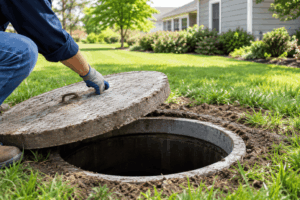
- Accessibility matters more than you think. If inspection covers get buried under landscaping or paved over, you’ll pay significantly more when urgent repairs are needed.
How Often Should Monitoring Happen? Here’s the recommended schedule
| How Often | What Needs Checking | The Reason Behind It |
| Every month | Walk the drain field, look for soggy areas or sewage smells, make sure inspection covers are visible and accessible | Early signs like wet patches or odors show up long before a full-scale failure |
| Every three months | Measure tank levels, check pipe conditions, and inspect the grease trap | Sludge builds slowly — quarterly checks stop a minor rise from turning into an emergency |
| Twice yearly | Deep-clean grease traps and test flow rates across the system | High-use commercial setups need heavier maintenance to stay ahead of blockages |
| Once a year | Schedule a full professional inspection and pump if the measurements call for it | This is your system’s annual “health check” — it catches what shorter inspections miss |
| After major stress or weather events | Get an immediate post-event inspection (after floods, heavy storms, earthquakes, or holiday traffic spikes) | Extreme conditions can create hidden damage that only appears weeks later |
Properties around Mount Vernon, Stanwood, Oak Harbor, Sedro Woolley, and surrounding locations face different challenges depending on soil type, seasonal rainfall, and water table depth. Your inspection schedule might need adjusting based on these local factors.
Warning Signs: When Your Septic System Is Crying for Help
Stay alert for these symptoms, even between scheduled inspections:
- Drains start acting weird—slow emptying, frequent clogs, backups that seem to come out of nowhere. Your tank is probably full or pipes are blocked.
- Sewage odors drift through your building or linger outside near the drain field area. That smell means untreated waste is escaping somewhere.
- Wet, soggy ground appears over your drain field during dry weather. This is liquid sewage surfacing because it can’t absorb properly.
- Strange noises come from drains—gurgling, bubbling, rushing sounds when you’re not running water. Air displacement in the pipes signals blockages.
- Grass grows noticeably thicker and greener in patches above your drain field. The extra nutrients feeding that growth are coming from leaking wastewater.
Act quickly as soon as you spot these warning signs. What seems minor on Tuesday becomes a full crisis by Friday.
Why Partnering with Gateway Septic Services Makes Smart Business Sense
You opened your business to serve customers, not to become a septic expert. That specialized knowledge belongs to professionals who handle these systems daily.
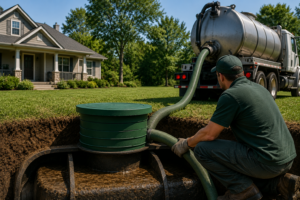
Gateway Septic Services handles everything—commercial septic system monitoring and maintenance, emergency pumping, repairs, complete system installations, and regular cleaning schedules. When diagnosis requires more than visual inspection, we bring camera equipment to examine pipes from the inside and high-pressure jetting gear to blast through stubborn clogs.
Being a family-owned business, we highly value our customer relations and the family we have built through our grit and determination. Being local to Mount Vernon, Stanwood, Oak Harbor, and Sedro-Woolley means we understand exactly what soil conditions and weather patterns your system faces.
After inspecting your system, we’ll tell you what actually needs attention right now versus what can wait. Prices are straightforward—no hidden fees that appear on the final bill.
Final Word: Protect Your Business — Before Septic Problems Protect You
Septic failures don’t send courtesy warnings. Systems deteriorate gradually until suddenly they don’t—and then you’re standing in a parking lot with sewage bubbling up through the asphalt while customers turn around and leave.
Regular commercial septic system monitoring isn’t something you do when business is slow and you’re feeling proactive. It’s mandatory protection for any commercial property with a septic system. Skip it, and you’re basically waiting for disaster to choose its own timing.
A professional septic system inspection for businesses by a qualified service like Gateway Septic Services lets you control the situation rather than react to emergencies. You extend your system’s working life, avoid violations, and keep your doors open when competitors are closed for repairs.
Stop waiting for problems to announce themselves. Take control now.
Ready for reliable septic care? Contact Gateway Septic Services at 360-826-5520 to schedule your inspection or maintenance service—and protect your business from failures that shouldn’t have to happen.